On this page
Someone hears your name, checks your LinkedIn, and still can’t tell what you actually do. And this is exactly where personal branding starts to matter.
But random posting won’t magically build a personal brand that people trust or one that creates opportunities.
To build a personal brand that creates opportunity, start with a clear plan and strategy. Define your ICP, shape your profiles around your expertise, and choose content pillars your audience cares about. Build a content strategy, posting strategy, and engagement strategy that show your wins, failures, lessons, and how your expertise helps others and creates value in your industry.
If you want to know how personal branding creates opportunities, you’re in the right place, and we’ll explain everything in the next sections.
What Is Personal Branding, and How Does It Create Opportunities?
Personal branding is the way you shape how people recognize, understand, and trust you. It brings your expertise, experience, values, work, and reputation together so people know what you do and why it matters. When that message is backed by real proof and consistent value, it can lead to referrals, clients, jobs, partnerships, and other opportunities.
Now, let’s get something straight.
Personal branding isn’t just about having a good-looking profile, posting regularly, or collecting thousands of followers.
You can have 50,000 followers and still struggle to convince someone to hire you. And you can have 2,000 followers and become the first person someone recommends for a particular project.
Then what matters here?
It’s authority, credibility, positioning, and the value you bring. A strong personal brand should help people understand three things:
- Who you are: Your personality, professional identity, values, and experience.
- What you do: Your expertise, specialization, skills, and the problems you solve.
- Why they should trust you: Your results, achievements, failures, lessons, and the value you’ve created for others.
How Does Personal Branding Create Opportunities?
Personal branding creates opportunities by building authority, establishing trust, increasing professional visibility, and helping the right people recognize your expertise. It can attract new clients, job offers, business partnerships, referrals, speaking invitations, and long-term professional relationships.
Here’s how it actually works:
- Builds Recognition: People start associating your name with specific expertise, skills, and industry knowledge.
- Establishes Trust: Your achievements, failures, experience, and case studies give people reasons to believe your capabilities.
- Attracts Opportunities: Potential clients, employers, and business partners can discover your expertise without you approaching them first.
- Creates Referrals: When people understand what you do, they can confidently recommend you to others.
- Builds Long-Term Value: Your reputation grows with your experience, creating opportunities beyond individual projects or campaigns.
And there’s some interesting data behind this. A 2025 Aurora University questionnaire of 1,000 American professionals found that personal branding helped:
34%
build stronger networks
27%
secure interviews
22%
land new jobs
Source: Aurora University personal branding study. These were self-reported findings from an exploratory study, not proof of direct causation.
7 Steps to Build a Personal Brand That Creates Opportunities
Building a personal brand requires a clear strategy, a defined audience, and a recognizable professional identity. You need to understand what you’re offering, who you’re serving, how you’re positioning yourself, and what makes your expertise valuable.
From optimizing your profiles to creating valuable content, building relationships, and converting conversations into clients, every step should contribute to a recognizable and trustworthy reputation. Here’s a practical approach to building your personal brand from scratch:
01Define Your Expertise, Offerings, and Solutions
Before creating content or optimizing your social media profiles, understand what you’re actually bringing to the market. This is where your personal branding strategy should begin.
Start by listing your professional skills, industry knowledge, experience, and strongest areas of expertise. Identify the problems you can solve and the people who would benefit from your knowledge.
Then translate those capabilities into clear offerings. For example, imagine you’re an experienced UI/UX designer.
| Your expertise | Your offering | The solution |
|---|---|---|
| UI/UX design | Product design services | Improving digital product experiences |
| UX research | UX audits | Identifying usability problems |
| Conversion optimization | CRO consulting | Improving website conversion performance |
| Web design | Website design services | Building effective digital experiences |
Notice how each offering connects expertise with an actual customer problem.
Your expertise explains what you know and understand. Your offering explains how someone can work with you. Your solution explains the value they receive from that relationship.
Your personal brand becomes much easier to understand when your offerings are clear.
02Define Your Ideal Customer Profile (ICP)
Now that you’ve identified your expertise and offerings, determine who actually needs those solutions.
This is where your Ideal Customer Profile (ICP) becomes important.
An ICP describes the type of organization or customer that benefits most from your offering and represents a suitable potential buyer. For individual consumers, you can define the equivalent customer profile around their characteristics, needs, and buying behavior.
Start by researching these important areas:
- Industry: Identify which industries experience the problems you solve.
- Company Size: Determine whether your solutions suit startups or enterprises.
- Decision-Makers: Identify the people responsible for purchasing decisions.
- Pain Points: Understand the problems your potential customers experience.
- Business Goals: Identify the outcomes they’re actively trying to achieve.
- Buying Capacity: Understand whether your offering fits their budgets.
- Information Sources: Discover where they research solutions and industry insights.
For example, a personal branding consultant might target startup founders, CEOs, independent consultants, and experienced professionals. But simply identifying these job titles isn’t enough information.
You also need to understand their motivations, professional challenges, ambitions, and reasons for investing in personal branding.
Talk to existing customers, interview potential buyers, analyze competitors, and study relevant industry discussions. These activities provide better customer insights than building an ICP around assumptions.
Once your ICP becomes clear, your positioning and content become much more relevant.
03Optimize Your Profiles
Your social media profile is often where people evaluate your professional identity after discovering your work.
And this is why profile optimization deserves serious attention.
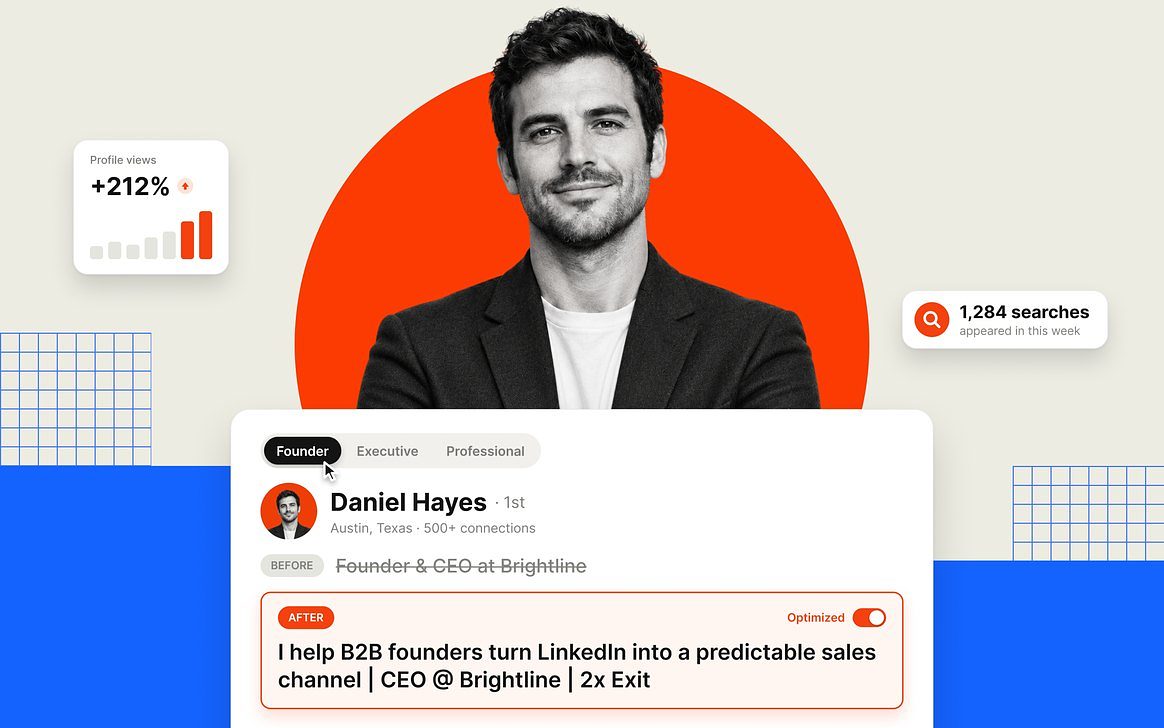
Treat your LinkedIn, Instagram, Facebook, website, and other relevant profiles like professional landing pages. Each profile should communicate your identity, expertise, offerings, credibility, and next steps without creating unnecessary confusion.
Pay particular attention to these elements:
- Profile Headline or Bio
- Explain your specialization, target audience, and primary value proposition clearly. Avoid generic descriptions that could represent thousands of professionals.
- About Section
- Communicate your professional journey, expertise, achievements, positioning, and the problems you solve. Make your unique selling proposition understandable without excessive industry jargon.
- Featured Section or Portfolio
- Display relevant projects, case studies, testimonials, achievements, and examples of your previous work.
- Profile Visuals
- Maintain consistent professional visuals across platforms wherever your audience encounters your brand.
- Call to Action
- Give interested visitors a clear way to contact you or explore your services.
Think about the questions someone might have while visiting your profile. Can they understand your expertise without searching through dozens of unrelated posts? Can they identify your offerings without sending you unnecessary clarification messages? Can they find enough evidence to evaluate your capabilities?
Your profile should answer those questions naturally.
A well-optimized profile doesn’t guarantee conversions, but it removes unnecessary friction from the discovery process.
04Define Your Content Pillars
Once your positioning and profile are clear, decide what your audience should associate with your name.
This is where content pillars become essential.
Content pillars are the core topics that guide your personal brand communication. They help you demonstrate different aspects of your expertise without making your content feel disconnected.
We’d recommend starting with five content pillars.
Expertise and Education
Share practical knowledge, tutorials, industry insights, and solutions to common problems. Help your audience understand something they previously found difficult.
Experience and Achievements
Showcase your projects, professional milestones, case studies, and measurable results. Explain the decisions behind your work and the outcomes they produced.
Personal Stories and Lessons
Talk about professional failures, difficult experiences, mistakes, and important lessons. Explain what happened and how those experiences changed your approach.
Industry Opinions and Perspectives
Discuss industry developments, challenge outdated assumptions, and explain your professional perspective. Original thinking helps distinguish your voice from generic industry commentary.
Services and Solutions
Explain your offerings, demonstrate your working process, and address common customer objections. Help potential customers understand when and why they need your expertise.
Your content pillars should reflect both your professional authority and your audience’s interests. They shouldn’t exist simply because other creators use similar categories.
There’s research supporting the commercial value of this approach.
The important lesson is that your content should demonstrate useful thinking, not simply advertise your expertise.
05Build Your Content Strategy and Posting Strategy
Having content pillars doesn’t automatically give you a content strategy. You still need to determine how those topics become valuable, recognizable, and consistent content.
Start by creating a strategy that answers these questions:
- Content Objectives: What should each content category accomplish?
- Content Formats: Which formats communicate your expertise most effectively?
- Brand Tonality: How should your audience recognize your communication style?
- Publishing Frequency: How consistently can you create quality content?
- Posting Schedule: Which publishing windows produce meaningful engagement?
- Platform Selection: Where does your target audience actively consume information?
- Performance Measurement: Which metrics indicate meaningful progress?
For example, educational content might establish your expertise, while case studies demonstrate your capabilities. Personal stories can communicate your professional values, while service-related content explains your commercial offerings.
Your posting strategy should support these different objectives. Create a monthly content calendar using your established pillars. Assign topics, formats, publishing dates, and objectives before beginning production.
Then test different publishing times using your platform analytics. There isn’t one universally effective posting time for every industry or audience.
Also, establish a recognizable writing style and communication tone. Your audience should gradually recognize your perspective without relying exclusively on your profile name.
06Build Engagement and Strategic Professional Relationships
Publishing valuable content helps people discover your expertise, but meaningful relationships help develop professional trust.
This is where your engagement strategy and networking activities become important.
Start by identifying relevant professionals, potential clients, industry leaders, and communities. Spend time understanding their interests before approaching them with generic messages.
Build your engagement strategy around these activities:
- Meaningful Engagement
- Participate in relevant conversations with thoughtful comments and useful professional perspectives. Add something valuable instead of repeatedly posting generic compliments.
- Strategic Networking
- Connect with people who share relevant professional interests or business objectives. Build relationships gradually instead of treating every connection as potential revenue.
- Direct Outreach
- Send personalized messages when you identify genuine opportunities for collaboration or business conversations. Explain your reason for contacting someone without immediately pushing your services.
- Community Participation
- Join relevant professional communities, attend industry events, and participate in meaningful discussions. These environments can introduce you to people beyond your existing network.
- Relationship Development
- Maintain conversations with existing connections and follow up when appropriate. Professional relationships become more valuable through consistent and mutually beneficial interactions.
There is also relevant evidence behind this approach. According to iHire’s September 2026 State of Online Recruiting report, surveyed employers used:
67%
employee referrals when recruiting
43.4%
social media
43.1%
professional networking sites
The research covered 318 employers and 1,054 job seekers across 57 industries in the United States.
These figures demonstrate the importance of professional relationships and digital visibility within recruitment. They don’t establish that personal branding directly causes referrals or employment.
07Convert Your Personal Brand Into Actual Opportunities
Now comes the part that connects everything together. You’ve established your expertise, defined your audience, optimized your profiles, created valuable content, and developed professional relationships.
But how does all that activity translate into actual opportunities? You need a clear conversion process.
Start by creating simple ways for interested people to move forward. Make your services accessible, your contact information visible, and your next steps easy to understand.
Your conversion process should include these activities:
- Clear Calls to Action
- Tell interested people exactly how they can explore your offerings or contact you. Make each next step relevant to their level of interest.
- Inbound Lead Management
- Respond to relevant inquiries and understand the problems potential customers want solved. Record important details so promising conversations don’t disappear.
- Personalized Follow-ups
- Continue relevant conversations without repeatedly sending generic promotional messages. Give people useful reasons to continue discussing their requirements.
- Discovery Conversations
- Understand their objectives, challenges, expectations, and available budgets before recommending solutions. This helps establish whether your offering actually fits their needs.
- Tailored Proposals
- Present solutions based on the customer’s requirements and expected business outcomes. Explain your approach, deliverables, timelines, and commercial terms clearly.
- Performance Tracking
- Measure qualified inquiries, booked meetings, referrals, proposals, and successfully converted customers. These metrics reveal whether your personal branding strategy produces meaningful business results.
Final Takeaway
Building a personal brand isn’t about becoming popular or collecting followers. It’s about making your expertise recognizable, your experience valuable, and your reputation worth remembering. A strong personal brand communicates who you are, what you do, and why people should trust your work. With the right positioning, content strategy, and consistent effort, you can attract clients, partnerships, referrals, and long-term opportunities.
You must remember you’re not just building an online presence. You’re building an asset that grows with your career.